
I’ve always had a bit of a problem with our Tracey; the calculated…
Unfollowing The Recipe
“To do as you have always done while expecting the result to be different is a kind of insanity.” Rita Mae Brown
Most of my teaching in art, over the past twenty years, has been based on the twin pillars of technique and history; studying why and how great artists achieved their results and following those recipes that provide us with something similar. If you want to paint like one of the masters, for instance, there are recipes in my book Tate: Master Watercolour, that will turn you into a mini-Turner or a proto-Sargent, but how, then, can you actually arrive at something that is well and truly your own?
A great many cook book recipes are variations on a theme. Whether you’re a Delia, a Nigel or a Jamie fan, after a while, you get the gist and after many years at the stove, may find yourself doing as I do; dispensing with recipes altogether, chopping and frying an onion and then taking things from there. As an artist, I enjoy the experimentation and as a teacher of art, just like Delia, I get through quite a lot of recipes of my own – and find myself chopping a great many figurative onions as well. Sometimes, I still burn them.

Raw lapis lazuli from Kabul, Afghanistan
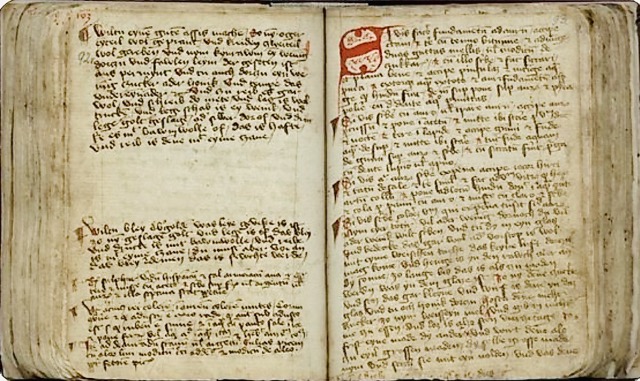
Cennino Cennini’s 15th century treatise (left) on making Ultramarine Blue pigment from semi-precious laps lazuli is the mother of all recipes. You pound the stone, sift it, strain it, mix it up, leave it for three days and nights and then you prod it with sticks – in a glazed porringer full of lye. After the sticks, if you’re lucky, you get a dribble of the finest, most precious Ultramarine Blue. And if you’ve followed Cennini’s recipe diligently, it’ll be worth ten times more than the stone it came from.
But, say you wanted a different blue – a cheaper, more versatile one, like Prussian Blue, for example, which was not only favoured by Frederic I of Prussia for the uniforms of his soldiers, but by Japanese printmakers like Hokusai, all the French Impressionists (except Renoir, who was horrified by it) and astronomer, Sir John Herschel, the inventor of the blueprint? You didn’t just swap out the lapis for a different stone; the recipe from start to finish, had to be entirely different.


Ultramarine or Prussian?
 First of all, it would have been necessary to wait a couple of hundred years for the technology. Then, you’d need to get hold of some dried cow’s blood and potash, which you’d heat, then filter before adding an alum iron vitriol solution to create a green precipitate, which would be further filtered, treated with hydrochloric acid and then filtered yet again.
The thing is, that when Jacob von Diesbach first made Prussian Blue in Johann Dippel’s laboratory in 1704, he was actually trying make Florentine Lake from cochineal beetles. Yes, he was trying to make red, not blue; but the potash, which he’d borrowed from Dippel, was contaminated with animal blood, because Dippel had a thing about raising the dead and made noxious elixirs from animal carcases, but that is, quite literally, another story…
Dippel, it turns out, was born at Castle Frankenstein, near Darmstadt and conjecture has it that Mary Shelley heard all about Dippel from her stepmother who got the story from one of the Brothers Grimm.
So the lesson here seems to be, follow the recipe studiously and you’ll get exactly what you were expecting or get the recipe wrong and you could change the world. Frederic I, the French Impressionists and blueprints aside, Prussian Blue was colourfast and quickly replaced indigo as the ideal printing ink. It was also used in typewriter ribbons and cosmetics and is, to this day, an antidote for heavy metal poisoning as well as the leading tool for detecting lead poisoning.
Frontispiece of one of the 500 first edition copies of Mary Shelley’s ‘Frankenstein.’

 Three centuries after Diesbach and Dippel’s serendipitous discovery, another industrial grade blue pigment popped up unexpectedly in a chemistry lab at Oregon State university. Prof. Mas Subramanian and his colleagues were researching new materials for computers at the time by super-heating Yttrium, Indium and Manganese. Instead, quite without meaning to, they invented a pure blue pigment that’s more durable than either Ultramarine or Prussian Blue, doesn’t fade, makes perfect purples and is phenomenally heat-resistant. In a few years, you can imagine bright blue buildings springing up all over the place.
This time, the professor and his team didn’t get the recipe wrong, because there was no recipe. They just put stuff in the microwave to see what would happen. Knowing your onions is useful, of course, or you might blow yourself up, but if you want to create something really startling, then you need to mess things up a bit somehow – you need to, as John Cage said, in his addendum to Sister Corita Kent’s Art School Rules, leave ‘plenty of room for X quantities.’
This is when I usually trot out J.M.W. Turner’s reply when asked about his working method:
‘I never lose an accident.’
A 40ml tube of Oregon (YInMn) Blue (available from Jacksons at only £153.00)

Related Posts



Comments (0)